Saturday, April 25, 2009

Koh-i-Nor


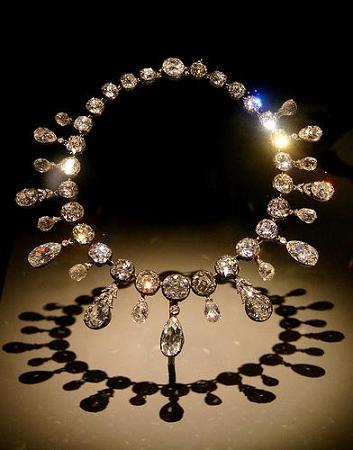
The Koh-i-Nor (meaning “Mountain of Light”) Diamond has an amazing, and fairly bloodthirsty history. It was originally taken from a diamond mine in India. The earliest documentation about it appeared as late as approx, two and a half centuries prior to the birth of Christ, although records later show evidence of it being in the hands of royalty some five thousand years before.

The Koh-i-Nor is a large, oval-shaped blue/white, totally uncut diamond, and it is still incredibly beautiful - the kind of thing for which men will go to war, killing many people, in order simply to achieve ownership of this stunning stone.

The earliest authentic evidence of the Koh-i-Nor is found in the Baburnama, the memoirs of Babur, the first Mogul ruler of India. Born in 1483, Babur (meaning “lion” a nickname which was descended in the fifth generation from Tamerlane on the male side, and in the fifteenth degree from Genghis Khan on the female side) grew up to be a very strong, and very capable warrior.

With the blood in his veins of two of the greatest conquerors Asia has ever seen, it is not at all surprising that Babur himself should have become a great conqueror in his own right. Babur, in addition to being a warrior, was also a cultured and civilised man - a writer and a poet.

After many bloody battles - victories and defeats - Babur had decided to hand the responsibility of the Koh-i-Nor to his eldest son, Humayan, who not much later, became very sick. It was strongly emphasized to Babur by his medical men (what would probably be called, today, “witch doctors”) that he would need to sacrifice this special stone in order to save his son’s life. Thereupon, Babar donated the Koh-i-Nor to the Sultan of Delhi. Once Humayan had recovered to full health, Babur went into battle again, and ransacked the Sultan’s palace, and, after much bloodshed, regained possession of the Koh-i-Nor diamond.

The Koh-i-Noor Diamond
After several centuries of a relatively peaceful existence, the Koh-i-Nor Diamond made its way to the United Kingdom, where it now resides in The Maltese Cross, which is part of the crown worn by the late Queen Elizabeth, the Queen Mother. It is now on permanent display, along with the rest of The House of Windsor’s jewelery, in London

Wedding Accessories Tips for Him


On this “day of all days” not just any old cufflinks will do! These days wedding day jewelry for the Groom has become a category unto itself.

Deciding on which studs to select or whether the watch he wears to play golf will “do just fine”, have become important questions!

If the affair is a formal one, or even semi formal, a set of studs (which close the shirt instead of buttons) with matching cufflinks will be important. These can range from whimsical, martini glasses or mini sports cars ( we’ve got great ones by Robin Rotenier) to the extravagant…gold and diamonds by Michael C. Fina. If you’re going to precious or semi-precious stones, a bit of classy humor need not be left behind…we’ve got a fabulous set of gold, diamond and ruby cigar cufflinks !

Watches have always been a traditional gift given to the Groom on his wedding day, either from the Bride or her parents. If you’re going this route, and he already owns a great sporty watch (or is a collector!) giving the one you love a handsome dress watch will solve your Grooms wedding day jewelry dilemma. You know this way he won’t be trying to get away with wearing the one he got in high school!

Browse our great selection of cufflinks!

Jewelry
Jewelry
Jewelry

Type of rings


PLATINUM DIAMOND WEDDING BAND PLATINUM 5.5MM WEDDING BAND PLATINUM 6MM WEDDING BAND

Maevona

Mull Collection

Platinum Diamond Wedding Band

Price $5,050.00

Maevona

Harris Collection

Platinum 5.5Mm Wedding Band

Price $2,805.00

Maevona

Harris Collection

Platinum 6Mm Wedding Band

Price $2,805.00


PLATINUM DIAMOND WEDDING BAND PLATINUM 3MM DIAMOND WEDDING BAND PLATINUM DIAMOND WEDDING BAND

Maevona

Mull Collection

Platinum Diamond Wedding Band

Price $2,530.00

Maevona

Canna Collection

Platinum 3Mm Diamond Wedding Band

Price $1,720.00

Maevona

Stronsay Collection

Platinum Diamond Wedding Band

Price $1,530.00


PLATINUM 3.5MM WEDDING BAND PLATINUM 3.0MM WEDDING RING 18KT ROSE GOLD WEDDING BAND

Maevona

Harris Collection

Platinum 3.5Mm Wedding Band

Price $1,290.00

Maevona

Harris Collection

Platinum 3.0Mm Wedding Ring

Price $1,225.00

Maevona

Ensay Collection

18Kt Rose Gold Wedding Band

Price $1,005.00


WEDDING RINGSMaeVona


MaeVona

Welcome to MaeVona. A fresh face arrives; far from the crowd...this is MaeVona. Lovingly created, exquisitely crafted, MaeVona jewels stand out, bring joy and show love. Jewels to celebrate sentiment and great occasions: for engagement and marriage, for individuals with character.

MaeVona is the ultimate vision of Scottish jewelry designer Maeve Gilles, an incredible young woman who has worked, designed, taught and exhibited her way around the world, winning awards, artistic and commercial acclaim along the way.

Pick your own Maevona piece to match the unique beauty of your face, tell the world your story.

MaeVona

rings

The Family on Fifth For over 70 years, Michael C. Fina has been ensuring everlasting quality for several generations of discerning New Yorkers. As leading purchasers of the world’s finest quality diamonds, and with the most comprehensive selection of fine tableware and home items available on the East Coast, we have become known as the premier bridal destination in the city. We are the only family-run diamond house on Fifth Avenue, and our name is our living trust.

Above all else, the diamond specialists at Michael C. Fina appreciate the importance of building lifelong relationships by ensuring exceptional, personal customer service. Since 1935 It is our promise to be here for you personally as you achieve different milestones in your life. At Michael C. Fina, our primary focus is on building a relationship that will endure throughout the years. Becoming a trusted part of your family legacy is our own family’s commitment.

About Diamonds


Diamonds are a rare and extremely reflective natural mineral, known to touch a woman"s heart. They are the hardest natural mineral on earth, which makes them perfectly suited for everyday wear in jewelry like engagement and wedding rings. Most people think of diamonds as colorless and transparent, however diamonds are found in many different colors, the most common of which are yellow and brown. In between these colors a number of variations exist and these are known as “fancy color diamonds".

When selecting a diamond, the four C's are the most important characteristics to consider. These are: color, clarity, cut and carat weight.

Diamonds are thought to have been first discovered, mined and used for their beauty in India. Diamonds in India were associated with divinity and were used to decorate religious icons. Throughout history diamonds have been a symbol of prominence, power, beauty and love. Diamonds are the perfect gift for the person you love, or as a special treat for yourself. Let Michael C. Fina help you find the perfect diamond for you!

Ruby

ruby is a red gemstone with varying color from a light pink to a blood red. A variety of the mineral corundum (aluminium oxide). The color is caused by chromium. The name comes from ruber, Latin word for red.

The other varieties of gem-quality corundum are called sapphires. Ruby is considered as one of the four precious stones, which includes sapphire, emerald and diamond. It is are mined mostly in Africa, Asia, Australia, Greenland, Madagascar and North Carolina. But most often found in Myanmar (Burma), Sri Lanka, Kenya, Madagascar, and Cambodia, and it can be also been found in the U.S. states of Montana, North Carolina and South Carolina. The Mogok Valley in Upper Myanmar has produced some of the finest rubies but, in recent years, very few good rubies have been found there. The unique color in Myanmar (Burmese) rubies is described as "pigeon’s blood". They are known in the trade as “Mogok” rubies. In central Myanmar the area of Mong Hsu also produces rubies. The latest ruby deposit to be found in Myanmar is situated in Nam Ya. In 2002 rubies were found in the Waseges River area of Kenya. Sometimes spinels are found along with rubies in the same rocks and are mistaken for rubies. However, fine red spinels may approach the average ruby in value.

Blue

A fluorine aluminium silicate that comes in yellow, yellow-brown, honey-yellow, flax, brown, green, blue, light blue, red and pink ... and sometimes it has no color at all. The name "topaz" is derived from the Greek Word tòpazi[òs].
14K White Gold Ring with Radiant Blue Topaz and Diamond Accents, Blue Topaz
Known for at least 2000 years and is one of the gemstones which form the foundations of the twelve gates to the Holy City of the New Jerusalem. These so-called apocalyptic stones are intended to serve in protection against enemies and as a symbol of beauty and splendour. It cannot be proved conclusively whether the name of the topaz comes from the Sanskrit or the Greek, though the Greek name 'topazos' means 'green gemstone'. The Romans dedicated the topaz to Jupiter. The colour in which the topaz is most commonly found is yellow, and that is the colour in which it occurs in one of the major German gemstone rocks, the Schneckenstein (a topaz-bearing rock said to resemble a snail) in Saxony. In the 18th century, it was mined there during a period of over 60 years. However, most of the crystals were hardly a centimetre in diameter. You had to go to Siberia or Brazil to find crystals as large as your fist. Having said that, anyone who is interested can convince himself of the beauty of cut specimens in the topaz set in Dresden's Grünes Gewölbe (Green Vault). The enormous and magnificent topaz from the Portuguese crown, the Braganza, was for a long time thought to be a diamond. It weighs 1680 ct..

International Diamond Grading Laboratories


AGL (American Gemological laboratories, Inc)
Founded in 1977. Tend to specialise in colored diamonds and gems. Reports and verifications
580 Fifth Ave. Suite 706, New York, NY 10036
Tel: (212) 704-0727, Fax (212) 764-7614, email: aglgemlab@aol.com

AIGS (Asian Institute of Gemological Sciences)
Jewelry Trade Center, 6th Floor, 919 Silom Rd
Bangkok 10500, Thailand
Website: AIGS
Tel: (662) 267-4325/7, Fax: (662) 267-4327

AGSL (American Gem Society Laboratories)
These are for the Trade only
8917 W. Sahara Ave., Las Vegas, NV 89117
Website: AGSL
Tel: (702) 255-6500, Fax: (702) 255-7420

CCIP Gemological laboratory (Chambre de commerce et d'Industrie de Paris Laboratory)
Also known as the French Gemological Laboratory
2 Place de la Bourse, 75002 Paris France
Website: CCIP
Tel: (33) 1-40-262545, Fax: (33) 1-40260675

CGL (central Gem Laboratory)
Miyagi building, 5-15-14 Ueno Taito-ku
Tokyo 110-0005, Japan
Website: CGL
Tel: (81) 3 3836-1627, Fax: (81) 3 3836-6861

DEL (Deutch Diamant und Edelsteinlaboratorien Indar-Oberstein)
(German Diamond & Gemstone Laboratories Idar-Oberstein)
Mainzer Str. 34, D-55743 Idar-Oberstein, Germany
Website: DEL
Te;: (49) 6781-981355, Fax (49) 6781-981357

EGL (European Gemological laboratory)
Website:EGL
They have branches in most major diamond capitals including, Antwerp, Johannesburg, Istanbul, London, Tel Aviv and Seoul.

Also there is the EGL USA Group at 6 West 48th Street in New York, NY 10036
Their Tel; (212) 730-7380. Fax: (212) 730-7453
Website: EGL USA
They were founded in 1986 and are independent of the EGL labs in Europe
They have branches in Los Angeles, Vancouver and Toronto also.

GCAL (Gem Certification & Appraisal Lab)
580 Fifth Ave, Lower Lobby
New York, NY 10036
Website: GCAL
Tel: (212) 869-8985. Fax: (212) 869-2315

Gem A (Gemmological Association & Gem Testing Laboratory of Great Britain)
This one was founded way back in 1925 and is for the trade only
27 Greville Street, London, EC1N 8TN, UK
Website: Gem A
Tel: 44-207 404-3334, Fax: 44-207 404-8843

GIA Gem Trade Laboratories Inc
Founded in 1949 and also for trade only
5355 Armada Drive, Carlsbad. CA 92008
Tel: (800) 421-7250 & (760) 603-4500
Also: 580 Fifth Ave., New York, NY 1003.
Tel: (212) 221-5858
Website: GIA

GGL (Gubelin Gem Lab Ltd)
Maihofstrasse 102, CH-6000 Lucerne 9 / Switzerland
Website: GGL
Tel: 41 41-429-1717, Fax: 41 41-429-1734

GIT (Gem & Jewelry Institute of Thailand
Chulalongkorn University, Phayathai University
Phayathai Road, Patumwan,
Bangkok 10330 Thailand
Website: GIT
Tel: (662) 218-5470-4, Fax (662) 218-5474

HRD (Hoge Raad vorr Diamant)
The Belgium HRD was founded in 1976. They also have offices in Hong Kong, The US, The Middle East, Italy and Spain.
Hoveniersraat, 22, B-2018 Antwerp, Belgium
Website: HRD
Tel: (32) 3-222-06-31, Fax (32) 3-222-06-05

IGI (International Gemological Institute)
The IGI was founded in Antwerp in 1975 and is one of the most well known internationally.
There are branches in most of the major diamond capitals including, Bangkok, Dubai, Los Angeles, Mumbai, Seoul, Tel Aviv, Tokyo and Toronto
US address is: 589 Fifth Avenue, New York, NY 10017.
Website: IGI
Tel: (212) 753-7100, Fax (212) 753-7759

PGS (Professional Gem Sciences)
Founded in 1980
5 South Wabash, Suite 1905, Chicago IL. 60603
Website: PGS
Tel: (312) 920-1541, (888) 292-1888, Fax (312) 920-1547

SSEF ( Swiss Foundation for the Research of Gemstones)
Founded in 1974)
Falknerstraase 9, CH-4001, Basel, Switzerland
Website: SSEF
Tel: (41) 61-262-0640, Fax (41) 61-262-0641

Diamond Appraisal Laboratories


G.I.A. The Gemological Institute of America.
GIA is the industry standard for grading.
Certificates provide:

Shape Measurements
Weight
Depth Percentage
Table Percentage
Girdle Thickness
Culet Size
Polish
Symmetry
Clarity Grade
Color Grade
Fluorescence
Comments about Diamond
Plot of Internal and External Inclusions
GIA Grading Certificate

A.G.S. - American Gem Society

The A.G.S. gemological laboratory is equal to or more strict than G.I.A. AGS quality reports are most often used by diamond cutters who wish to confirm near ideal or ideal cut diamonds. The A.G.S. grading laboratory director is Peter Yantzer, past founding director of G.I.A.'s Gem Trade Laboratory. The A.G.S. was founded by Robert Shipley the founder of G.I.A. A.G.S.. Diamond Quality Reports provides this information:

Description Shape and Cut
Weight Measurements
Depth Percentage
Pavilion Depth Percentage
Table Percentage
Crown Angle
Crown Height Percentage
Pavilion Angle
Culet Size
Girdle Thickness
Polish/Symmetry
Clarity Grade
Color Grade
Cut Grade
Fluorescence
Comments about Diamond
Plot of Internal and External Inclusions
HRD Laboratory Hoge Raad voor Diamant
The Diamond High Council:

H.R.D. Certified Diamond Reports provide:
HRD Grading Certificate

Shape and Cut
Measurements
Weight
Proportions
Girdle Percentage
Table Percentage
Crown Percentage
Pavilion Percentage
Girdle Thickness
Culet Size
Finish
Clarity Grade
Color Grade
Fluorescence
Comments about Diamond
Plot of Internal and External Inclusions
E.G.L. - The European Gemological Laboratory:

EGL Grading CertificateE.G.L. provides a detail diamond report. The E.G.L. certification does provide more proportion information than the G.I.A. diamond report by including the important pavilion and crown angles in their diamond report. Be aware that plots of internal and external blemishes on E.G.L. certifications are much less detailed than G.I.A. or A.G.S. quality reports. Many diamonds under one carat in size are certified by E.G.L. due to the benefit of lower cost and faster service. E.G.L. also provides a economically priced miniature version of its full certification. E.G.L. Certified Diamond Reports provide this information:

Shape and Cut Measurements
Weight
Depth Percentage
Table Percentage
Crown Angle
Pavilion Angle
Girdle Thickness
Culet Size
Polish
Symmetry
Clarity Grade
Color Grade
Fluorescence
Comments about Diamond
Plot of Internal and External Inclusions
Here are some Appraisal Abbreviations

Diamond Appraisal


When it comes to the price of diamonds it is important to know the value of a diamond. So if you want to buy a diamond an appraisal is vital to ensure you fully understand the value of your diamond. Most diamonds are sold retail with a heavy mark up, especially from department stores, and the true cost of diamonds is considerably less than the retail value. Often 50 percent or more.

What is Diamond Appraisal
No two diamonds are ever alike. Each have their own characteristics. A diamond appraisal is where a properly qualified gemmological laboratory studies your diamond and gives you a report that lists all the qualities of that particular diamond A diamond should be properly appraised and a certificate should be issued giving the details of that appraisal. When you come to sell that diamond, having a properly authenticated appraisal by an established appraiser can make a big difference with the sale.

Some points to take note of when having your diamond appraised.

Seek out an established appraiser. Some people have gotten an appraisal from a department store or the store where they purchased the diamond. This would not guarantee you an proper appraisal. More like a promotional for that store.

The appraiser should be independent and at least a member of the National Association of Jewelry Appraisers.

What the Appraisal Consists of
The appraisal should consist of the exact and specific details about the diamond. This should include:

Weight. Diamonds are weighed in carats. A carat is .2 grams. A gram of diamond would be a massive 5 carats. Very large in diamond terms although the actual diamond is small. A carat is further divided into Points, and there are 100 Points to a carat. So 1 point is .002 of a gram. Very small indeed. Shape and Cut. What is the shape and cut of the diamonds There are various different established cuts.

The proportions of the diamond should be shown including the:

Depth
Table
Crown
Pavilion
Girdle

The culet. This is a point on the bottom of a diamond's pavilion and it is called a culet (pronounced que-let or the French sounding que-lay). Very often the culet is polished as a flat facet to prevent chipping. More often these days the cutter will "close" this facet to a point. Here would describe the type of culet for this particular diamond

Also what is the finish. The quality of the polish and symmetry. These should be graded as GOOD or above.

The Clarity Grade should be clearly listed also. Check the clarity chart here Diamond Clarity.

The color grade should also be shown and lastly any additional comments that might be relevant for the diamond. Here is a list of the color grades. Diamond Color

A diagram of the diamond showing any flaws should also be included and the date of the appraisal should be shown also.

Some appraisal abbreviations are shown here Diamond Appraisal Abbreviations

Some appraisors can be found Diamond Appraisors.

Buy Diamonds
Interestingly enough buying diamonds online can be a better buy than from say Sears, for example. The mark up is considerably less as one does not have to contribute to the bright lights, fine store fittings and employees wandering around not to mention the management and shareholders �cut�. However it is vital in this situation that you get a proper appraisal with the diamond as you are buying "blind" as it were. You cannot see the diamond before you buy, only a picture on your screen.

An independent appraiser is worth his weight in gold when it comes to appraising the price of a diamond. the cost also especially when it comes to insurance.

The details of the stone should be recorded along with the value and other details that identify the stone in the event it becomes stolen.

Diamond appraisal, therefore, is not just a idle fancy but a necessary and important step to safeguarding the price of your diamonds.

Picture courtesy of International Gemological Instititue

Carat Weight


Diamonds are the heaviest and densest material known to man. Diamonds are weighed in carats. A carat is .2 grams. A gram of diamond would be a massive 5 carats. Very large in diamond terms although the actual diamond is small.

A carat is further divided into Points, and there are 100 Points to a carat. So 1 point is .002 of a gram. Very small indeed.

There is a scale of weight for Diamonds and this is shown here:

Weight Size (diameter) Weight: pts (diameter) Weight: fractions
0.10ct 3.00mm 10pts 1/10th
0.20ct 3.85mm 20pts 1/5th
0.05ct 1.00mm 5pts 1/20th
0.25ct 4.10mm 25pts 1/4th
0.33ct 4.55mm 33pts 1/3th
0.40ct 4.80mm 40pts 4/10ths
0.50ct 45.15mm 50pts 1/2th
0.66ct 5.72mm 66pts 2/3th
0.75ct 6.00mm 75pts 23/4th
0.90ct 6.40mm 90pts 9/10ths
1.00ct 6.65mm 100pts 1 carat
1.50ct 7.50mm 150pts 1&1/2 carats
2.00ct 8.10mm 200pts 2 carats

Due to the minute differences in the weight of most diamonds they should always be accurately weighed on an electronic scale to the nearest 1000th of a carat (.001). Stones are always rounded up or down to the nearest 1000th of a carat by the way.

The other factor to consider with weight is a certificate. Where a diamond has been assessed and weighed at a laboratory, a certificate should be issued to confirm the assessment. No stones should ever be purchased without a certificate from a bona fide laboratory.

Code Laboratory
ADL Antwerp Diamond Laboratory
AGAAmerican Gem Apraisal Laboratories
CIBCIBJO (Europe)
CSAJewellery Council of South Africa
DGLDiamond Grading Laboratories (London)
EGIEuropean Gemmological Institute (Antwerp)
EGLEuropean Gemmological Institute (Antwerp & London)
PNFP N Ferstenberg Pbv A
GAGGesellschaft fur Angewandte Gemmologie
GANGemological Institute of Antwerp
GIAGemological Institute of America
GIINational Gemological Institue of Israel
GILGem Information Laboratory
GTLGem Testing Laboratory of Great Britain
NGLNorthern Gemmological Laboratories (UK)
HRDDiamond High Council (Antwerp)
HRGHeinz R Gartner, DGemG, FGA (Germany)
IGIInternational Gemmological Institute (Antwerp)
PSLPrecious Stone Laboratory (London)
VPTVerena Pagel-Theisen, DGemG FGA (Germany)
WGWerner Galia, DGem, (Germany)

A complete list of laboratories with address and contact numbers is available at Lab List

It cannot be iterated enough to ensure that all diamonds you buy should have a certificate from one of the above laboratories.

See also Diamond Appraisal

Diamond Clarity


Clarity is the term given to indicate the purity of a diamond. Most diamonds have minute imperfections and the clarity is the way of grading the purity depending on the number of imperfections the diamond has or does not have.

Diamond Clarity Terms
The diamond industry uses the term "internal characteristics" instead of "inclusions". For natural diamonds, the "internal characteristics" in the diamond are growth crystals that give the diamond its character and unique fingerprint. Laboratory made diamonds are somewhat different and usually contain no inclusions.

Diamond Inclusions. These are imperfections, or flaws, inside the diamond.
Tiny spots of white, black, or other colors.
Cracks. You can get cracks in diamonds, some cause no problems at all. Others can cause the stone to split.
Colored and uncolored crystals.
Diamond Blemishes.
Flaws on a diamond's exterior surface.
Many exterior flaws are the result of poor cutting and polishing process.

Basic diamond terms can also be found at Diamond Glossary

How Diamond Clarity is Graded
GIA clarity grading is generally done under 10x magnification with darkfield illumination. The GIA Gem Trade Laboratory, uses a binocular stereo microscope as standard equipment, able to zoom to higher magnifications when required.

These microscopes are equipped with darkfield illumination, as well as an ultraviolet light filtered overhead light. When grading is performed using a 10x handheld loupe, "darkfield" illumination is more difficult to achieve. The grader must use a light source in such a way that the base of the stone is lit from the side, and the crown of the stone is shielded from the light.

After the diamonds is thoroughly cleaned, the diamond is gently picked up using tweezers in a girdle-to-girdle hold. The grader views the diamond for the first time through the table, studying the culet area of the stone for inclusions. The diamond is then set down, and picked up with the tweezers in a table-to-culet hold. In this position the diamond can be studied from the pavilion side, and the crown side, examining the diamond through each facet for inclusions.

Once a sector of the diamond has been thoroughly examined the grader rotates the diamond using the tweezers, so that the neighboring sector can then be examined. The grader uses darkfield lighting (This is secondary light that has reflected off other objects rather than using a direct light source) to reveal characteristics, and alternatives to reflected, overhead lighting to find out if a characteristic lies either within the stone or on the stones surface, or both.

If the grader is using a stereo microscope, they may zoom in to a higher magnification to make closer observations of an inclusion, but then return to 10x magnification to make an assessment of it's impact on the clarity grade.

If a stereo binocular microscope has been used, a final assessment using a 10x loupe is performed before the final judgment is made on the clarity of the stone. The grader firstly decides the clarity category of the diamond using the keywords; none (FL, or IF if blemished), minute (VVS), minor (VS), noticeable (SI), obvious (I). The decision is then made on the grade of the diamond.

Diamond Clarity Grading
The grading scale is as follows:

IF would have no inclusions and be internally flawless, perfect clarity in other words.
Both grades VVS1 and VVS2 would be very very small inclusions, pin pricks in fact.
VS1and VS2 are still very small and difficult to see.
SI1 and SI2 would be tiny but easily seen.
I1 is small and recognisable immediately.
I2 and 13 would have larger and/or numerous inclusions, obvious recognisable immediately
There is also third pique (pronounced peekay) sometimes written as p3.

Any flaws in Diamonds can include external blemishes also from natural causes as well as from poor polishing. Most blemishes and inclusions are small enough to have no or little effect on the beauty of the diamond.

Most inclusions you find diamonds do not affect the diamonds' performance or structural integrity. However, where you get large clouds this can affect a diamond's ability to transmit and scatter light. This reduces the quality and the demand for and so the price of the diamond. Large cracks close to or breaking the surface will reduce a diamond's resistance to fracture also.

Naturally. diamonds with higher clarity grades are more valued, with the exceedingly rare "flawless" graded diamond fetching the highest price. However, minor inclusions or blemishes can be useful, since they may used as identifying particular diamonds rather like a fingerprint.

Also, as synthetic diamond technology improves and distinguishing between natural and synthetic diamonds becomes more difficult, inclusions or blemishes can be used as proof of natural origin.

Diamond Inclusions and Blemishes
The diamond industry uses the term "internal characteristics" instead of "inclusions". For natural diamonds, the "internal characteristics" in the diamond are growth crystals that give the diamond its character and unique fingerprint.

There are several types of inclusions and blemishes, which can affect a diamond's clarity in varying degrees. Also some features resulting from diamond enhancement procedures, such as laser lines, are also considered inclusions and/or blemishes.

Inclusions
Clouds
Feathers
Included crystals or minerals
Knots
Cavities
Cleavage
Bearding
Internal graining

Blemishes
Polish lines
Grain boundaries
Naturals
Scratches
Nicks
Pits
Chip

Diamond Clarity Enhancement
Laser "drilling" involves using a laser to burn a hole to a colored inclusion, followed by acid washing to remove the coloring agent. The clarity grade is the grade after the treatment. The treatment is considered permanent.

GIA, as a matter of policy, does NOT certify clarity-enhanced diamonds. If you see a GIA Diamond Report with the words "clarity enhanced" or "fracture-filled," it is surely a counterfeit report.

Clarity can also be "enhanced" by filling the fracture much like a car windshield crack can be treated. Such diamonds are sometimes called "fracture filled diamonds". If this has been done it should be disclosed and reputable filling companies use filling agents which show a flash of color, commonly orange or pink, when viewed closely. There can be a significant price discount for fracture-filled diamonds.

One important point is that the treatment is not permanent or as long lasting as the diamond and the GIA will not grade fracture-filled diamonds for this reason. Reputable companies often provide for repeat treatments if heat causes damage to the filling. The heat required to cause damage is that of a blowtorch used to work on settings, and it is essential to inform anyone working on a setting if the diamond is fracture-filled, so they can apply cooling agents to the diamond and use greater care while working on it otherwise cracks may appear in the diamond and its value will be heavily reduced.

Diamond Clarity
So diamond clarity is important to consider when buying diamonds. A Diamond with no imperfections or inclusions would be a top grade diamond and would be classified as internally flawless (IF). It would be extremely rare and would command a much higher price than one which has many recognizable imperfections.

But when you read the detailed explanations for each clarity category, you see that the flaws usually cannot be seen by the naked eye without magnification, even by an experienced jeweler.

Most of the tiny imperfections do not affect a diamond's brilliance and it is not until you reach the bottom level of "I" categories that imperfections begin to detract from the beauty and the price of the diamond.

So do not be concerned too much if the clarity of your diamond is not near the top of the scale. Indeed, it can a characteristic that marks your diamond as being very individual and unique.

Buy Diamonds


The cost of buying diamonds can vary considerably depending on the type and quality of the diamond.

Diamonds can vary in price from a few hundred to many hundreds of thouosands of dollars depending upon the quality and the size of the diamond. the larger the diamond and the better the quality the more per carat they will cost.

You want to get the best diamond for your money so it is a good idea to have some idea of what the qualities of a diamond are and how they affect the price.

Here are some useful hints you can use to buy diamonds.

Types of Diamonds
There are many types of diamonds. The Cut of a diamond is the best way to recognize types of diamonds This is the shape of a diamond and the final presentation bu the diamond cutter. The more common shapes, called Cuts are as follows:

Round Brilliant
Emerald Cut
Princess Cut
Heart Cut
Oval Cut
Marquise Cut
Pear Cut
Round Brilliant

These are shown at the top of the page. Some Cuts are more popular than others and some are more suitable for certain types of jewelry than others. The Princess cut is probably the most poplar of all.

Diamonds are also categorized by their color, clarity and weight. Each plays a part in defining a type of diamond.

How Much are Diamonds
The price of diamonds vary. It is dependent upon the quality of the diamond, determined by the color, clarity and cut, and the carat weight of the diamond, which determines how big the diamond is. So to have an understanding of what price you should pay for a diamond, it is necessary to know what sort and quality of diamond you are buying.

As part of checking the price of the diamond there should be a certificate from an independent gemmological laboratory that lists the true characteristics and qualities of the diamond. This will help to get a accurate valuation of the diamond.

The higher quality diamond the higher will be the price. But also watch for low quality diamonds being sold for high prices. This is why it is so important to have an independent evaluation, especially for a high value diamond.

Where to Buy Diamonds
Buying diamonds online can give you the opportunity of finding the best cut diamonds. It is relatively easy for sellers to list their wholesalers inventories online whereas stores can only offer and show their current stock. This will open the door to a much larger selection of beautifully cut diamonds at the best price. Online dealers, tend to be cheaper than from the local diamond shop in the High Street as they have much lower overheads, no shop, utilities and little staff to pay for.

In addition, as there are many more dealers on line than there are stores, competition is increased and a greater variety of diamonds is made available. There may also be some tax benefits to be derived from buying interstate and even from other countries in many cases.

Browse the dealers online and locate those that are reputable and reliable. Ring them up and discuss how they operate. Read their terms and conditions on the web site. Ensure they have a fixed address and contact numbers and faxes. Check if they are members of a Diamond Association in their country.

Get each purchase independently appraised. This ensures you know what you are getting. It applies even if you are buying a diamond from a store. Especially if you are not experienced in understanding the value of diamonds.

Do a comprehensive search on prices. Once you know what to look for in a diamond you can compare apples with apples, or in this case diamonds with diamonds.

Whether you are buying just the one diamond for a celebratory occasion, or to impress that special person, or collecting as a hobby or for investment purposes, diamond buying can be a satisfying and rewarding experience provided you follow the important points above.

What to look for in Buying a Diamond
Firstly general information about diamonds is offered through the links on the right. the 4 C's of diamonds, cut, color, clarity and carat weight, the basic facts about diamonds, how to tell a real diamond from a imitation or zirconia. There are various addition articles covering the various facets (pun intended) of different diamonds, added on a regular basis so it pays to check back at regular intervals and read all of those as well.

Ensure you educate yourself about diamonds. Understand all about how diamonds are cut. Read the article on the 4C's of diamonds, cut, color, clarity and carat weight. Check out the educational links on the links page.

Tips and Hints
Diamonds look their best in a well lite environment hence the lighting in many stores is deliberately designed to show the diamonds at their best. However when you get the diamond home or in the natural light you would normally display it, the difference can be disappointing.

So there is an additional advantage to buying diamonds online where you can have them shipped to your home and inspect them in the light they would normally be worn. You can also take them to a local jeweller and get an additional assessment prior to confirming your purchase.

Ensure you get a certificate with any diamond you purchase. This is important not only to ensure you get what you pay for but also to establish the insurance value of the diamond and as substantiation when and if the time comes to sell it.

It is important therefore that you educate yourself very well with the various aspects of diamonds that you need to make an informed purchase.

Provided you do some due diligence and understand about diamonds you will be able to buy diamonds with confidence.

The Diamond 4C's


The 4Cs of diamonds, as they are commonly called, are the four main characteristics by which a diamond is valued or the price of a diamond is arrived at. It is important, when you go out to buy a diamond that these are understood and known.

These are Cut, Color, Clarity and Carat Weight.

Diamond Cut
The first of these is the Cut. The cut of the diamond is very important. It is this that determines the diamonds brilliance. This is made up of a number of measurements that determine the amount of light that enters and is reflected back out of the diamond. A diamond with many other beautiful and perfect characteristics can have little sparkle if the cut is incorrect or poorly done. The cut of the width and the depth can have a marked effect upon the brilliance and it takes a master diamond cutter to bring this out in a diamond.

There are basically eight cuts of diamond.

Round Brilliant Emerald Cut Princess Cut Heart Cut Oval Cut Marquise Cut Pear Cut Round Brilliant

More information on the diamond cut can be found here on the Cut

Diamond Color
The second important characteristic is the color of the diamond.

Diamonds colors are graded into 13 colors or tints with pure white being the top, D grade, to a poor yellow being the bottom, Z grade. It is important to know the color of the diamond you are going to buy as it came make a tremendous difference to the price of the diamond.

With a pure diamond in which there are no impurities or defects the color will be completely absent and the diamond is perfectly transparent. These are rare of course and command the highest price of any diamond. Was one moves down the color scale the grade changes to more color and less value.

This does not apply to colored diamonds, such as the Hope diamond for example. Red diamonds are considered the rarest of all.

Information on the colors, complete with a list, can be found here Color

Diamond Clarity
Clarity is the next grading method and describes the quality of the diamond as regarding imperfections called inclusions, and surface defects called blemishes. Most of the inclusions you find in diamonds do not affect the performance of the diamond but where you have large clouds of imperfections then that will affect the ability of the diamond to transmit and reflect light resulting in less sparkle.

In addition if there are any cracks in the diamond this will make it prone to fracture and even break. This is why it is important to examine a diamond free of any clasp or prongs. present in gem-quality diamonds do not affect the diamonds' performance or structural integrity. However, large clouds can affect a diamond's ability to transmit and scatter light. Large cracks close to or breaking the surface may reduce a diamond's resistance to fracture.

Some advantages with inclusions and blemishes is that it makes the diamond easy to recognize, but it is the "flawless" that command the best diamond price.

Further information is available at Clarity

Diamond Carat Weight
The carat is a unit of mass used for measuring gems and pearls, and is exactly 200 milligrams. The last grading is Carat Weight. The weight of the diamond is perhaps the most important way of valuing them.

Diamonds are weight in carats which refers to how much they weigh which give you an indication of their size since all diamonds have the same hardness and one carat weight for all diamonds is the same weight and size.

The diamond weight is measured in units called carats. One carat is divided into 100 parts. Each part is called a point. A diamond that weighs one (1.00) carat also weighs 100 points. A carat weighs .2 grams.

Extensive information and a chart of the main diamond weights can be found at Carat weight

These are the four main ways of grading diamonds. There are other factors which get taken intro consideration but, in the main the 4c


Diamond Formation


This is a more technical appraisal of diamonds so includes many technical words on this page. This information has been obtained from Wikipedia on the subject of Diamonds.

Diamonds are formed by the prolonged exposure of carbon bearing materials to high pressure and temperature. On Earth, the formation of diamonds is possible because there are regions deep within the Earth that are at a high enough pressure and temperature that the formation of diamonds is thermodynamically favorable. Under continental crust, diamonds form starting at depths of about 150 kilometers (90 miles), where pressure is roughly 5 gigapascals and the temperature is around 1200 degrees Celsius (2200 degrees Fahrenheit). Diamond formation under oceanic crust takes place at greater depths because of higher temperatures, which require higher pressure for diamond formation. Long periods of exposure to these high pressures and temperatures allow diamond crystals to grow larger.

rought diamond

The slightly misshapen octahedral shape of this rough diamond crystal in matrix is typical of the mineral. Its lustrous faces also indicate that this crystal is from a primary deposit.

The slightly misshapen octahedral shape of this rough diamond crystal in matrix is typical of the mineral. Its lustrous faces also indicate that this crystal is from a primary deposit.

Through studies of carbon isotope ratios (similar to the methodology used in carbon dating, except with the stable isotopes C-12 and C-13), it has been shown that the carbon found in diamonds comes from both inorganic and organic sources. Some diamonds, known as harzburgitic, are formed from inorganic carbon originally found deep in the Earth's mantle. In contrast, eclogitic diamonds contain organic carbon from organic detritus that has been pushed down from the surface of the Earth's crust through subduction (see plate tectonics) before transforming into diamond. These two different source carbons have measurably different 13C:12C ratios. Diamonds that have come to the Earth's surface are generally very old, ranging from under 1 billion to 3.3 billion years old.

Diamonds occur most often as euhedral or rounded octahedra and twinned octahedra known as macles or maccles. As diamond's crystal structure has a cubic arrangement of the atoms, they have many facets that belong to a cube, octahedron, rhombicosidodecahedron, tetrakis hexahedron or disdyakis dodecahedron. The crystals can have rounded off and unexpressive edges and can be elongated. Sometimes they are found grown together or form double "twinned" crystals grown together at the surfaces of the octahedron. This is all due to the conditions in which they form. Diamonds (especially those from secondary deposits) are commonly found coated in nyf, an opaque gum-like skin ([citation needed]).

volcanic pipe

Diamonds can also form in other natural high-pressure, high-temperature events. Very small diamonds, known as microdiamonds or nanodiamonds, have been found in impact craters where meteors strike the Earth and create shock zones of high pressure and temperature where diamond formation can occur. Microdiamonds are now used as one indicator of ancient meteorite impact sites.

Diamond-bearing rock is brought close to the surface through deep-origin volcanic eruptions. The magma for such a volcano must originate at a depth where diamonds can be formed, 90 miles (150 km) deep or more (three times or more the depth of source magma for most volcanoes); this is a relatively rare occurrence. These typically small surface volcanic craters extend downward into formations known as volcanic pipes. The pipes contain material that was transported toward the surface by volcanic action, but was not ejected before the volcanic activity ceased. During eruption these pipes are open to the surface, resulting in open circulation; many xenoliths of surface rock and even wood and/or fossils are found in volcanic pipes. Diamond-bearing volcanic pipes are closely related to the oldest, coolest regions of continental crust (cratons). This is because cratons are very thick, and their lithospheric mantle extends to great enough depth that diamonds are stable. Not all pipes contain diamonds, and even fewer contain enough diamonds to make mining economically viable.

The magma in volcanic pipes is usually one of two characteristic types, which cool into igneous rock known as either kimberlite or lamproite. The magma itself does not contain diamond; instead, it acts as an elevator that carries deep-formed rocks (xenoliths), minerals (xenocrysts), and fluids upward. These rocks are characteristically rich in magnesium-bearing olivine, pyroxene, and amphibole minerals which are often altered to serpentine by heat and fluids during and after eruption. Certain indicator minerals typically occur within diamondiferous kimberlites and are used as mineralogic tracers by prospectors, who follow the indicator trail back to the volcanic pipe which may contain diamonds. These minerals are rich in chromium (Cr) or titanium (Ti), elements which impart bright colors to the minerals. The most common indicator minerals are chromian garnets (usually bright red Cr-pyrope, and occasionally green ugrandite-series garnets), eclogitic garnets, orange Ti-pyrope, red high-Cr spinels, dark chromite, bright green Cr-diopside, glassy green olivine, black picroilmenite, and magnetite. Kimberlite deposits are known as blue ground for the deeper serpentinized part of the deposits, or as yellow ground for the near surface smectite clay and carbonate weathered and oxidized portion.

Once diamonds have been transported to the surface by magma in a volcanic pipe, they may erode out and be distributed over a large area. A volcanic pipe containing diamonds is known as a primary source of diamonds. Secondary sources of diamonds include all areas where a significant number of diamonds, eroded out of their kimberlite or lamproite matrix, accumulate because of water or wind action. These include alluvial deposits and deposits along existing and ancient shorelines, where loose diamonds tend to accumulate because of their approximate size and density. Diamonds have also rarely been found in deposits left behind by glaciers (notably in Wisconsin and Indiana); however, in contrast to alluvial deposits, glacial deposits are not known to be of significant concentration and are therefore not viable commercial sources of diamond.

Diamonds can also be brought to the surface through certain processes which may occur when two continental plates collide and deeply formed rock is thrust to the surface, although this phenomenon is less understood and currently assumed to be uncommon.

Diamond Facts


cullinan_diamond

Diamonds are one of natures wonders, The hardest substance known to man diamond are used not only for jewelry to capture a ladies heart but also in industry as cutters and to ensure watches and other moving parts move smoothly.

What is a Diamond
A diamond looks like the clearest of crystal. It sparkles in the light and is ideal as a decoration in jewelry.

A diamond is made of carbon, the same substance as talc, the softest carbon known. The difference in hardness between the various carbons such as talc, gypsum, fluorite and diamonds is the way the atoms are arranged in the carbon. Diamonds are made under immense pressure and are the hardest of all the carbon substances.

The largest diamond ever found was the Cullinan Diamond in the Premier mine in South Africa in 1905. It weight in at a massive 3,106 carats, or 621.2 grams. This is 6.21 Kilos. It was cut into nine separate stones including the Cullinan or Star of Africa which weights 550.20 carats. This stone is mounted in the British Royal Scepter, part of the British Crown Jewels, and can be found in the Tower of London.

80% of the worlds diamonds are unsuitable for jewelry. They are used in industry for cutting other material or other diamonds and for watches as, for all intents and purposes, cannot wear out.

To get 5 grams of diamond generally requires mining or sorting through about 1 million grams of material but only 20% of these are suitable for jewelry. The rest are used in industry.

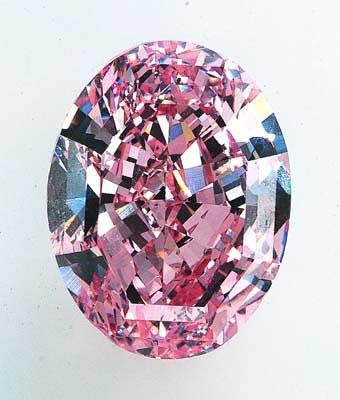
Diamonds are thought to be white but in fact can be a range of colors, see Color of Diamonds for more information. Colored diamonds are often called Fancies.

types


Round - Is one of the most common cuts for a Diamond but that doesent mean they are any less special or beautiful!


Emerald Cut

Oval Cut


Square Cut


Pear Cut


Heart Cut


Marquise Cut


COLOR


Yes Diamonds Do Have Color...Diamonds Can range from colorless to the spectrum of the rainbow. Each in their own Beautiful!

When we speak of grading a diamond for color we mean deciding by which amount the diamond’s “body color” deviates from the whitest possible.

(water like colorless) color.

It is difficult to see the subtle differences between one color grade to the next. When grading diamonds for color it is important to have a Master Color Diamond Set (pre-graded diamonds usually E-G-I-J) to compare the diamond being graded. Also a controlled lighting environment is helpful for accuracy. Diamonds must always be graded unset to ensure grading accuracy.


CLARITY

How Pure is the Diamond Most diamonds aren't perfect and include blemishes, inclusions, or feathers naturally created through time. The clarity of a diamond refers to how clean or clear a diamond is internally. The cleaner the diamond, the higher the price. The clarity scale was developed to have a universal rating system of diamonds imperfections.

Purchasing Diamonds Online

You should make sure to educate yourself on everything about diamonds. Make sure you understand clarity, cut and color as well as carat weights. If you have knowledge in diamonds you will be a more difficult customer to attempt to cheat. Once you have fully educated yourself on diamonds, you can begin your shopping.

Don’t rush into any purchase of a diamond online. Shop slowly and carefully. Look around for diamonds that may be on sale or special. The Internet gives you a great ability to comparison shop so take advantage of it. Once you determine where the lowest prices are you should investigate the site that you are dealing with. Just because you found a low price doesn’t mean you are ready to buy yet.
Ask for the seller’s background information like their associations in the jewelry industry that they belong to. Make sure they have a return policy as well as a refund policy. Ask for their ability to offer other services like sizing and mountings as well as a setting for your diamond. What does the shipping cost and do they offer any deals on shipping for spending a certain amount of money? Check online to see if there have been any reviews posted about this site. You can also inquire with the BBB online to see if there have been problems with the site.

Make sure that they can provide you with a grading report from a lab. You should make sure you see the report before you purchase the diamond. You can take advantage of an escrow service that will possibly have the diamond appraised while they have it in their possession. The way this system will work is that you send your money to the escrow service, the seller sends the diamond to the escrow service and the escrow service appraises the diamond. Once all is said and done the diamond is shipped to you, the money is sent to the seller and the transaction is complete. Provided of course that you used a good escrow service.

Diamond Guide - How to choose a diamond


Labs to grade diamonds for their certification use a grading criterion. When you are purchasing a diamond or making an investment in diamonds you must use four of these criteria. Cut, carat, clarity and color are the four criteria that you must use to determine the quality of your diamond.

The color in a diamond is the result of its composition; this will never change in the stone. When color is being described in a white diamond, the jeweler is referring to the presence of color in the diamond. They are also describing the absence of that color, as well. The diamond that is most desirable is one that does not have color. This is true of white diamonds because a diamond that doesn’t have color will sparkle more than one that does.
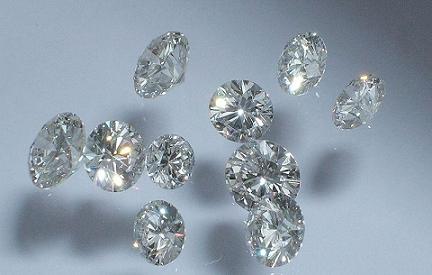
The cut of the diamond is referring to the ability of the diamond to reflect light. Diamonds are typically cut with fifty-eight facets. The sparkle of the diamond is directly dependent on the cut of the stone. The angles that are used in the cut, as well as the finish of the stone will determine how well the stone will reflect light and sparkle. Cut can also affect how strong the stone is. If the stone is cut incorrectly it could be broken easily. Also, if a stone is cut too thin, the light will go through the stone and out the back and lose its brilliance and will not shine as it should. The cut criterion is the most important trait of all four of the criteria.

There can be flaws that are created in the stone while it is forming. Clarity refers to the amount of these flaws in the stone. If a stone is perfectly clear it is shinier and will sparkle with more brilliance. A stone that does not contain any flaws is very rare so they will be very expensive. If a stone is to be called a flawless stone, a professional diamond grader who is using a magnification of 10X must inspect it.

The carat is the weight of the stone. A carat is the same as two hundred milligrams. The carat weight is split into one hundred points or segments. That would mean that one hundred and fifty points is one and a half carats.

When you get to the store to buy a diamond make sure that you are not afraid to ask about these things. Get the answers to the questions that you need to determine the quality of the diamond that you are considering. When you are shopping for diamonds that are certified by a diamond grader you can be sure that your selection is of the quality that is stated on the certification. If you know the criteria that is used you will be able to determine the quality of the stones that you are looking at. Shop around and be sure to get the best stone for the best price.

Man-made Diamonds


In 1954, General Electric created the first synthetic diamonds. A man made diamond has all of the same materials and features of a natural diamond, but is created in a lab by man. This is not the same thing as cubic zirconia or glass that is used to simulate a diamond.
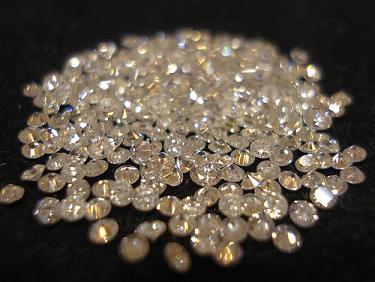
Even thought the technology has been around since 1954, the synthetic diamond had not been available on the market until the 90’s. General Electric was still working on the technology so that they could produce a diamond that was the equivalent in quality to a natural stone. Once they managed to accomplish this, it was soon discovered that the cost of the technology was greater than the cost to mine diamonds.

Eventually a company called Gemesis Corporation came up with a solution to the problem. They produced synthetic diamonds in their lab that were of the same quality as diamonds that were taken from mines. And they managed to do it for a cheaper cost. Now, this company is able to make synthetic diamonds and colored diamonds also. They are generally around a third of the cost of a natural diamond. The problem has now become that synthetic diamonds are becoming more rare than natural ones.

How to Tell if a Diamond is Fake or Real


With the advancements that have been made in technology it is virtually impossible to tell if a diamond is real just by looking at it. This is even truer if you are not knowledgeable about diamonds. There are some things that you can do to make sure that you don’t buy a fake diamond.
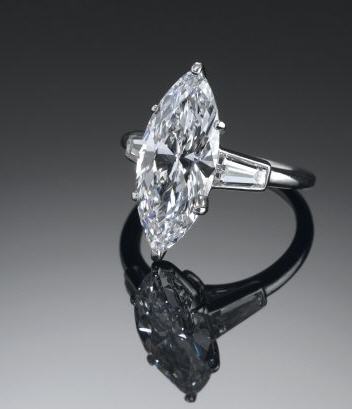
The first thing you should do is make certain that the jeweler you are working with is reputable. Stay away from jewelers that you don’t know. If you are dealing with a new jeweler ask for documentation on any stones you might buy. If they cannot provide documentation do not buy the diamond.

Take a look at the setting. Fake stones are usually set in cheaper metals. Take a good look at the stone itself. Fake diamonds are not very strong, but diamonds are the strongest stone in the world. If there are scratches on the diamond it is not real.

If you have already purchased a diamond, take it for an appraisal. You might want to take it to a couple of jewelers to make sure that the appraisals are accurate. If the appraisal discovers that your stone is fake, you might be told that you switched the diamond when you attempt to bring it back to the store. That is why it is important to have the documentation for the stone that you purchased. No two stones or diamonds are alike and the documentation will reflect the stone that you purchased.

Rings

With all the other bills you probably have, it can take you some time to save up for an engagement ring. There is always the option to finance your engagement ring. You should go to the jeweler where you wish to purchase the ring and tell them of your plan. Ask them if you can have the option to finance the engagement ring. They can usually give you a good idea of how much your payments will be and how much money they will require you to put down on the ring. This will help you decide if you are able to afford the ring at that time.
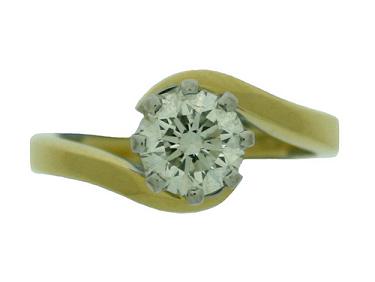
A good way to find out what kind of ring your beloved would want is to have your family or some mutual friends take her out on a day of shopping. Make sure that they stop and check out the engagement rings in the store and take note of what kind of ring she likes. This will allow you to go back and get the exact ring she wants for her engagement ring. You should always ask about returns or exchanges in the event she does not like the ring that you purchase.

Diamond Engagement Rings


Since the day Archduke Maximilian presented a diamond engagement ring to Mary of Burgundy, a tradition was started. Since that time men have been giving diamonds to women with the promise of marriage since 1477. Today’s man must take into consideration a great many factors when selecting the right ring for an engagement ring.
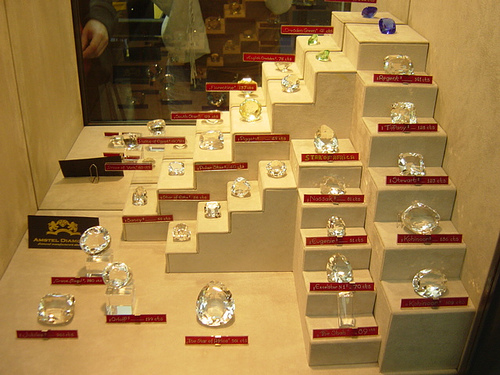
The first thing that must be done is determining the budget. There is a two months salary method that many people use to determine the cost of the engagement ring. The rule simply means that the engagement ring should cost the same as two months of your salary

How Rare Are Diamonds?

There are so many diamonds available in jewelry stores it is hard to think that they are actually a rare item. Many people don’t even wonder how that diamond that is in the jewelers case made its way into the store. There is a great deal of work involved in bringing a diamond to the condition that would be sold in a store.
When diamonds are mined, there is only one quality one carat diamond found in one million that are mined. At that rate it would take five million diamonds to find one two carat diamond. Two hundred tons of ore will need to be mined to find just one diamond. It is even possible that those that are found are only industrial quality. These are the diamonds that are used on drill bits.

When you walk into your local jewelry store take a good look at all the one carat diamonds. These stones are worth so much because of the work it took to bring them to the jeweler’s case. They are a one in a million item.

Diamond Mines and Mining


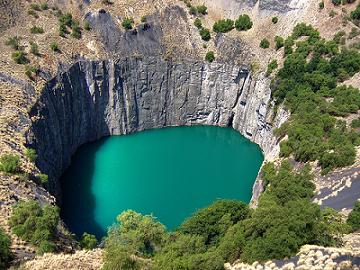
When we are wearing our diamond jewelry weKimberley Diamond Mine - South Africa don’t often think about the way the diamonds came to be where they are. A natural diamond is taken from the earth through a process called mining. There are two ways of performing this process. One of the ways is called Alluvial Mining and the other is called Pipe Mining.
Volcanic pipes are used to pull the diamonds from the ground when the process used in pipe mining. Man did not create these pipes. These pipes are formed naturally in the earth. Next to the pipes shanks are placed while tunnels are drilled through the pipe. The large rocks that are pulled from the mine are taken to sorting areas to be screened for diamonds.

When the Alluvial process is used the mining process is done on the riverbeds and beaches. The sand that is on the beach will be moved until the right level for finding diamonds is achieved. A barrier is made to keep the water away while the mining is being performed. The same process of removing the piles of sand is made as the rocks are removed in the pipe method. The sand is brought to a screening area where the sand will be searched for diamonds.

Costly diamonds

Diamonds have known to have got their name from the language of the ancient Greeks. The ancient Greek word, adamas that could be roughly translated as 'untamed' or 'invincible' is said to have been the root from which the modern name, diamond, was derived. Mined mostly in Africa apart from Brazil, Australia, India, Russia and Canada, these stones gained immense popularity in the 19th century when huge diamond mines were discovered and many modern cutting and polishing methods came about. A combination of its sheer brilliance and rarity resulted in escalating prices further augmented by clever advertising campaigns. As of today, diamonds rank as one of the most costliest gemstones to ever exist.

A beautiful diamond in a jewellery shop may look pleasing to the eye, but the various processes and sheer effort that goes into bringing a diamond to its finished stage remains mostly unknown. This website aims at familiarizing you with as much as possible about diamonds. Apart from information on how a diamond is mined, cut, processed and made into the beautiful stone that we know, we also have information here that will help you in making the right choice when faced with the daunting task of shopping for diamond jewellery. How a diamond is priced, what are the flaws that may exist in a diamond, how a diamond is weighed and what kind of scams you may be subjected to are some things you will most necessarily have to understand before shopping for diamonds.